
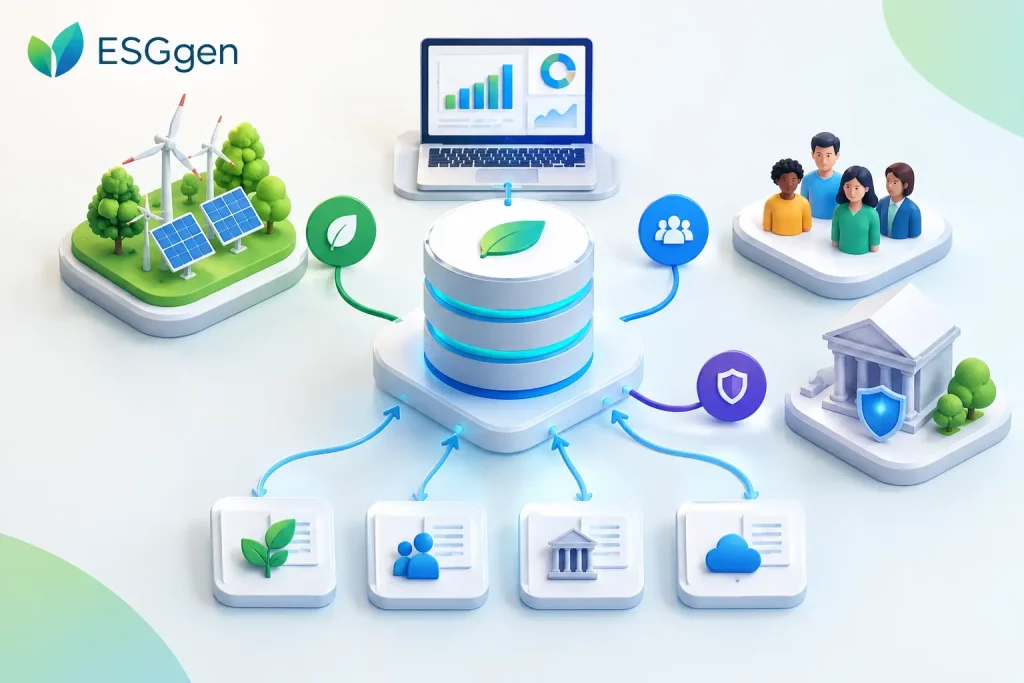
A credible ESG data collection process begins far earlier than the reporting deadline. It begins on the factory floor, in procurement records, within HR systems, and at leadership meetings where decisions are made. For business leaders, the real challenge is not finding more data. It is creating a disciplined way to gather the right information, validate it, and use it to improve performance.
When ESG data is fragmented, reporting becomes a stressful annual exercise and sustainability goals remain disconnected from operations. When it is organized, ESG becomes a practical management tool – one that can reduce waste, strengthen governance, improve stakeholder confidence, and support long-term growth.
Why ESG Data Collection Is a Business Process
ESG data is often treated as a compliance requirement. That view is too narrow. Environmental, social, and governance information reveals how a company uses resources, manages people, controls risk, and creates value over time.
For example, electricity consumption can point to rising operating costs as well as carbon exposure. Employee turnover can reveal workforce risks, leadership gaps, or training needs. Supplier records can show whether procurement practices are aligned with company standards. Board oversight, policy approvals, and incident reporting can demonstrate whether governance is active in practice rather than existing only on paper.
The value of collecting this information depends on what the organization intends to do with it. A startup may begin with a simple baseline to establish responsible growth practices. A larger company may need a more detailed process to support customer questionnaires, investor expectations, assurance, or formal sustainability disclosures. The right level of effort depends on the company’s size, sector, reporting obligations, available systems, and ESG maturity.
Start With Material Issues, Not a Data Wish List
The most common mistake is collecting every ESG metric that seems available. This creates unnecessary work, inconsistent records, and reports that do not help management make decisions.
Start by identifying the ESG issues most relevant to the business and its stakeholders. Consider where the organization has significant impacts, where it faces operational or reputational risk, and where stronger performance could create commercial value. A logistics company may prioritize fuel use, fleet safety, labor practices, and vendor oversight. A professional services firm may focus more heavily on energy use, employee well-being, diversity, data privacy, and ethical conduct.
This assessment should involve more than the sustainability team, if one exists. Finance, operations, HR, procurement, facilities, legal, and senior management all hold parts of the ESG picture. Their input helps ensure that selected metrics reflect real business conditions rather than an external checklist.
Once priorities are clear, define a focused set of indicators. A practical starting set may cover energy and fuel consumption, water and waste, workforce demographics, training, health and safety, community engagement, anti-bribery controls, supplier screening, and governance oversight. Not every organization needs every metric at the beginning. What matters is that each metric has a purpose, a clear definition, and an owner.
Design the ESG Data Collection Process Around Ownership
Good data does not appear because a reporting team sends reminders. It is produced through clear responsibilities and repeatable routines.
For every chosen metric, document five essentials: what is being measured, where the source data comes from, who provides it, how often it is collected, and who reviews it. This is often called a data register or metric inventory. It creates a shared reference point and prevents confusion when staff roles change.
Take electricity consumption as an example. The metric definition should state whether the organization is collecting total kilowatt-hours, utility cost, renewable energy use, or all three. The source may be utility bills, meter readings, or a facilities management system. A facilities manager may provide the numbers monthly, while finance verifies invoices and a designated ESG lead reviews unusual movements.
The same discipline applies to social and governance information. HR may own headcount, turnover, training hours, and safety incidents. Procurement may own supplier assessments. Corporate secretarial or legal teams may maintain board attendance, policy approvals, and ethics records. Senior leaders should remain accountable for ensuring that ESG performance is reviewed and acted upon.
A RACI model can be useful for more complex organizations. It clarifies who is responsible for preparing data, accountable for its quality, consulted for technical input, and informed of results. This avoids the familiar problem of everyone assuming someone else is handling the metric.
Build a Reliable Data Trail
Credibility depends on evidence. If a company cannot trace a reported figure back to invoices, registers, payroll records, incident logs, or system reports, that figure is difficult to defend.
Create a simple evidence trail for each metric. Store source documents in a controlled location, use consistent file names, record the reporting period, and keep notes on calculations or assumptions. If waste data is provided by a vendor, retain the vendor statement and document the unit of measure. If staff training is tracked through attendance sheets, ensure that completion criteria are clear.
Consistency matters as much as accuracy. A company may use utility bills one year and estimated consumption the next because bills were missing. That does not automatically make the data unusable, but the change should be documented. Management and external stakeholders need to understand where estimates were used and why.
Data quality checks should be built into the process, not left until the report is being drafted. Compare current figures with prior periods, investigate major variations, check units of measurement, and reconcile key operational data with finance records where appropriate. A sudden drop in energy use might represent a successful efficiency project, a site closure, a missing invoice, or a data-entry error. The number alone cannot tell the story.
Choose Tools That Match Your Maturity
Organizations do not need expensive software to start collecting meaningful ESG data. For an early-stage program, a controlled spreadsheet, documented templates, and a monthly collection calendar may be sufficient. The priority is reliable ownership and consistent definitions.
As operations grow, manual processes can become difficult to maintain. Multiple sites, complex supply chains, frequent customer requests, and assurance requirements may justify integrated ESG software or dashboards connected to finance, HR, procurement, and facilities systems. Technology can reduce repetitive work, but it cannot correct poorly defined metrics or missing accountability.
A sensible approach is to begin with the process, then select tools that support it. Before investing, test whether the proposed system can capture the company’s priority metrics, retain evidence, manage approvals, and produce outputs needed by management. A tool that generates attractive charts but cannot explain the source of a figure creates a new reporting risk.
Turn Data Into Action and Measurable Value
Collection is only the first stage. ESG data should feed management discussions, operating plans, investment decisions, and improvement initiatives.
If energy data shows a high-consumption facility, the next question is whether equipment upgrades, maintenance changes, staff practices, or renewable energy options could improve performance. If turnover rises in a particular department, leadership should examine workload, development opportunities, compensation, and management practices. If supplier screening reveals gaps, procurement can prioritize engagement or establish clearer supplier requirements.
Set targets only after establishing a credible baseline. Targets should be ambitious enough to drive progress but realistic enough to guide operational decisions. A company may begin by reducing electricity intensity, increasing employee training completion, or ensuring that priority suppliers accept a code of conduct. Over time, targets can become more sophisticated as data quality and organizational capability improve.
This is where ESG becomes connected to transformation. Better data can reveal cost-saving opportunities, reduce exposure to operational disruptions, improve access to customers and capital, and strengthen trust with employees and communities. It also helps leadership demonstrate that sustainability commitments are backed by evidence.
Prepare for Review, Assurance, and Continuous Improvement
Before publishing ESG information or responding to major stakeholder requests, conduct an internal review. Confirm that definitions were applied consistently, evidence is available, calculations are documented, and claims match the underlying data. Pay close attention to statements that sound stronger than the evidence supports.
Independent assurance may become appropriate when a company faces regulatory obligations, investor scrutiny, major customer requirements, or a need for greater market confidence. Assurance should not be viewed as a last-minute inspection. The earlier the data process is designed with traceability and controls, the more efficient assurance becomes.
At ESGgen, the ASSA Program helps organizations move from awareness and assessment to strategy, implementation, and reporting. The objective is not simply to produce a polished disclosure. It is to build capabilities that improve how the business operates year after year.
A useful ESG data collection process evolves with the company. Review metrics annually, retire measures that no longer inform decisions, strengthen weak data sources, and add indicators as priorities mature. The most valuable dataset is not the largest one. It is the one leaders trust enough to use when making the next important business decision.